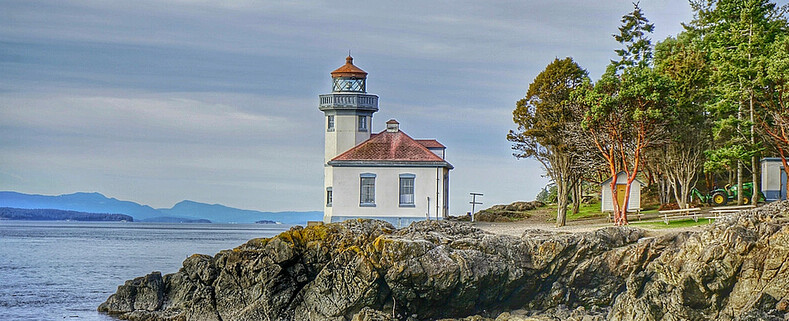
Lime Kiln Lighthouse

Lime Kiln Lighthouse on the west side of San Juan Island, Washington

Lime Kiln Lighthouse on the west side of San Juan Island, Washington

Lime Kiln Lighthouse on the west side of San Juan Island, Washington

Lime Kiln Lighthouse on the west side of San Juan Island, Washington

Lime Kiln Lighthouse on the west side of San Juan Island, Washington

Showing posts with label restoration. Show all posts

Thursday, February 20, 2014

No. 241 Boeing first built 727 aircraft

United 727 N7001U


20 years after the introduction of jet powered fighters and bombers for military applications the 
"Jet Age" started showing up in aircraft designs drafts for civilian and commercial use. By the mid 1950's airliners wanted to be able to carry more passengers for longer distances than what turbo props aircraft such as the Bristol Britannia 300x series, Lockheed L1649 Starliner and the Lockheed L188 Electra could transport. 
The first commercial airliner De Havilland Comet 1 entered service on May 2nd, 1952. But after a series of crashes and in flight breakups do to metal fatigue around the sharp edges of the square windows on the Comet 1 jet liners up take was slowed down. 
Boeing introduced its first jet liner in 1957 launching the 707-100s with Pan Am. And later offering versions of the 707 fuselage in shortened and extended cabins for intercontinental and trans-atlantic flights.
The success of jet airliners on long-haul flights was soon followed by air carries wanting the same speed, passenger numbers and reliability of jets in short haul domestic flights. United Airlines, American Airlines and Eastern Air Lines came to Boeing asking for a medium short haul jet aircraft that could land at smaller regional airports with less than 5000 feet of runway. 
In 1963 Boeing revealed its medium range jetliner the Boeing 727 outfitted with three P&W JT8D engines mounted to the tail of the aircraft. The Tri-engine Tail configuration made it possible for flights into and out of high altitude airports such as United Hub at Denver, Colorado; Overwater crossing to the Caribbean for Easter Air routes and was more fuel efficient that running 4 jet engines. 
The first Boeing 727 N7001U rolled out of its Renton Assembly building on November 27, 1962 and had its maiden flight on February 9th, 1963. Unlike most new aircraft designs N7001U was not relinquished to a prototype aircraft life of battered test flights and then to be chopped up. After she passed flight tests and FAA certification United Airlines purchased her for $4.4 million dollars on October 6th, 1964. Her last passenger flight for United was on January 13, 1991 from 
San Francisco, CA to Seattle, WA. Over her 27 years of flying service she flew 64,495 hours, made 48,60 landings and flew an estimated 3,000,000 passengers and generated more than $300 million dollars in revenues for United Airlines.

United 727 N7001U

From 1963 to 1984 1,832 Boeing 727's were manufactured. Boeing initially had a break even point of 250 orders but airliners world wide kept placing new orders throughout the 727-xxx versions. 
Amongst the design improvements of the 727 was the placement of the 3 engines to the rear of the aircraft. Without any engine pods under the wings the entire wing surface area could be mounted with tripple-slotted flap system and leading edge spoilers providing superior take off and landing performance at smaller regional airports with less than 5000' of runway. With the engines mounted high off the ground the 727 was also able to land on unimproved gravel runways since the chance of engine blade debris damage was minimized. 
The Boeing 727 was popular for regional air service because it was equipped with its own retractable stairs located at the rear of the aircraft, its own auxiliary power unit (APU) to provide electrical power to the cockpit, cabin area, air conditioning and air start for the main engines with out the need for terminal walkway or extra ground crew. 
Currently N7001U is housed at the Museum of Flight Restoration facility in Everett, WA. Volunteers are working to restore it to flying condition with the intent to ferry fly it to Boeing Field in Seattle where it will be on display under a newly covered air park at the Museum of Flight. 
United 727 N7001U


727 Achievements
  • First certificated commercial trijet (December 1963).
  • First "Quick Change" airplane, operated with passenger configuration during day and converted to all-cargo at night.
  • First to bring the speed and comfort of jet travel to hundreds of communities with short runways -- as short as 5,000 feet.
  • First commercial airplane in history to surpass the 1,000-sales mark for civil use.
  • First standard airliner to be fitted with Boeing "widebody look" passenger cabin interior.
  • First airplane to have a triple-slotted flap system for superior takeoff and landing performance.
  • First Boeing jetliner with completely powered flight controls. All flight controls are hydraulically powered, with dual units, except for the horizontal stabilizer, which is trimmed electrically.
  • First trijet to fly the North Atlantic with passengers, carrying charter loads between Canadian and European cities.
  • First commercial airplane to win a medal of honor from a king for surviving a fighter strafing attack (Morocco, 1972).
  • Pratt & Whitney designed the JT8D turbofan engine specifically for the 727, the first time in commercial aviation that a jet engine was "tailor-made" for an airplane.
  • First airplane to use the "jet mixing" principle for quieter operation. Because the engine had the lowest jet exit velocity of any engine when it was introduced, it also had the lowest noise level from the tailpipe.
  • First airplane to be certificated to FAA noise rules (FAR 36), even though Boeing was not required to do so because the airplane was in service years before the rule was written.
  • First large commercial airplane to carry its own built-in airstairs and auxiliary power unit and to feature single-point refueling for total independence of ground support equipment at through stops.
  • First airplane to be subjected to The Boeing Company's brutal fatigue testing and static airframe testing prior to flight. The $30 million test program was designed to ensure that no redesign of production airplanes would be necessary. During fatigue testing, the airframe demonstrated a useful life of more than 20 years of normal service.
  • First jet airliner certified by the FAA for operation from gravel runways.
  • First jet airplane considered quiet enough to use LaGuardia Airport in New York City. Two U.S. trunk operators began service June 1, 1964, from LaGuardia, both using 727s.
  • First jetliner to prove it could operate -- even with one engine out -- from Bogata, Colombia (8,355-foot elevation), Cuzco, Peru (10,800-foot elevation), and LaPaz, Bolivia (13,358-foot elevation). No jet had operated at any of these airports before.
  • First in range of all the "smaller" airliners. In 1973, an Advanced 727-200 flew nonstop from Toronto, Canada, to Copenhagen, Denmark -- a distance of 3,975 statute miles.

Tuesday, October 2, 2012

No. 123 Museum of Flight Restoration Center

Museum of Flight Restoration Center
2909 100th St. SW
Everett, WA 98204
http://www.museumofflight.org/restoration-center

Hours:                                                         Admission June - August                                             Adults (18 and up): $5
 9am-5pm                                                     Youths (5-17): $3
 September -May                                           Children (4 and under): Free
9am-4pm

In addition to the Seattle campus, the Museum of Flight operates a 23,000 square foot Restoration Center at Paine Field/Snohomish County Airport in Everett, Washington. The center is home to approximately three dozen aircraft in varying states of restoration by the Museum's volunteer restorers. Each project is a labor of love, sometimes requiring several years to complete. A group of dedicated volunteers works to restore each aircraft to exhibition quality which will then become part of static display at the Boeing Field location.


Museum of Flight Restoration Center Entrance
Mof Entrance
Flight Trainer at Museum of Flight
Flight Training Simulator
Vought F7U-3 Cutlass
de Havilland D.H. 106 Comet Mk. 4C
Cockpit of de Havilland D.H. 106 Comet Mk. 4C


Thursday, August 25, 2011

No. 08 1954 Hat & Boots Oxbow Park Georgetown (Seattle)

Hat and Boots Park 
Oxbow Park 
6430 Corson Ave S, 98108

MAP IT 

 This is a famous landmark south of Seattle, originally part of a cowboy-themed gas station built in 1954 named "Premium Tex." The orange hat, 19 feet tall and 44 feet wide, sheltered the station office; the boots were Cowboys and Cowgirls bathrooms (the slightly smaller one was for the ladies). Its owners hoped to expand the gas station into a Western-themed shopping center named "Frontier Village," but the effort proved unsuccessful. The gas station closed in 1988, and Hat 'n' Boots sank into a period of decay and vandalism. Skateboarders cracked the brim of the Hat.
A local community council raised funds to help save Hat 'n' Boots, which in 2003 were moved to Oxbow Park in Seattle's Georgetown neighborhood, a half-residential, half-industrial section of the city. The Boots were restored to their original state in 2005. But the Hat remained a wire skeleton for years until its restoration was finally completed in 2010. There are plans in the works to have it house an interpretive exhibit on the history and meaning of the Hat 'n' Boots.


By the late `80`s it looked like trail`s end for the Hat n` Boots gas station. Then Georgetown residents saddled up to save the 'soul' of their community.
Hat and Boots in Georgetown, 2002
Hat and Boots Restoration Project 2002


This is a famous landmark south of Seattle, originally part of a cowboy-themed gas station built in 1954 named "Premium Tex." The orange hat, 19 feet tall and 44 feet wide, sheltered the station office; the boots were Cowboys and Cowgirls bathrooms (the slightly smaller one was for the ladies).
Its owners hoped to expand the gas station into a Western-themed shopping center named "Frontier Village," but the effort proved unsuccessful. The gas station closed in 1988, and Hat 'n' Boots sank into a period of decay and vandalism. Skateboarders cracked the brim of the Hat.
A local community council raised funds to help save Hat 'n' Boots, which in 2003 were moved to Oxbow Park in Seattle's Georgetown neighborhood, a half-residential, half-industrial section of the city. The Boots were restored to their original state in 2005. But the Hat remained a wire skeleton for years until its restoration was finally completed in 2010. There are plans in the works to have it house an interpretive exhibit on the history and meaning of the Hat 'n' Boots.
All images are poperty of pugetexposure.blogpsot.com. Do not copy, download without contacting me first