

North Head Lighthouse
N Head Lighthouse Rd, WA 98624
MAP IT
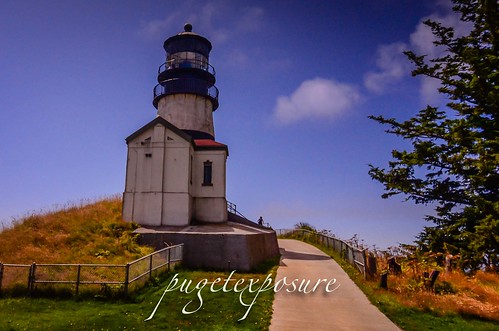
Construction of the 65' foot cement and plaster lighthouse was completed in 1897, 40 years after the Cape Disappointment Lighthouse, and its first-order Fresnel lens, which came from Cape Disappointment, was lit for the first time on May 16, 1898.
Mariners approaching the mouth of the Columbia River from the north side complained that they were unable to see the light from Cape Disappointment until they were nearly on top of the sandbar. The numbers of shipwrecks to north of the cape convinced the Lighthouse Board to make plans for adding an additional lighthouse.
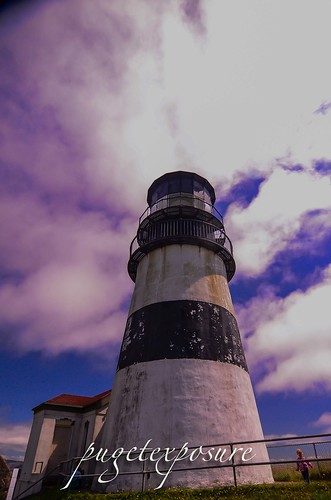
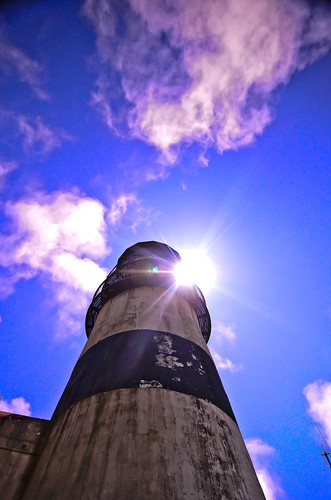
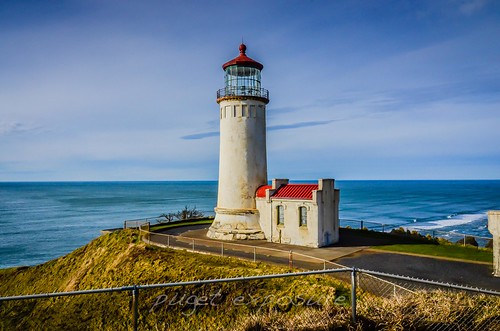
The North Head Lighthouse stands 194' feet above sea level and has 69 steps leading to the lantern room. Because there are 2 lighthouses so close to each other they needed to be visually different both day and night. The North Head Lighthouse has a solid white exterior plaster finish and a white signal light. The Cape Disappointment Lighthouse has a 10 foot solid black stripe around its midsection and has an alternating white and red flash sequence.
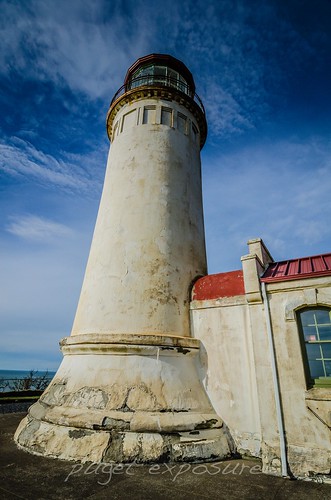 North Head is one of the windiest places in the United States, with wind velocities in excess of 100 mph being frequently measured. On January 29, 1921, winds were clocked at 126 mph before the measuring instrument blew away.
On April 19, 1932, a wild duck went crashing through the storm panes in the lantern room and caused slight damage to the lens. Wire nets had been placed around lantern rooms at other stations to prevent such occurrences.
The original lens was replaced by a fourth-order lens in 1935, when electricity came to the station. Seven years later, on June 22, 1942 at 12:35 a.m. the keeper was ordered to turn off the light. Fort Stevens, Oregon had just been fired upon by a Japanese submarine, and as part of a strategy to keep the location of Fort Stevens and Fort Canby hidden, the surrounding lighthouses were darkened until the danger was over.
Two of the Fresnel lenses used at North Head Lighthouse have been preserved. The first-order lens can be seen at the Lewis and Clark Interpretive Center, inside Cape Disappointment State Park, and the fourth-order lens is housed at the Columbia River Maritime Museum in Astoria, Oregon. The two aero beacons remained in the lantern room during the 1990s, but they were replaced around 1998 by a modern beacon lit by a twelve-volt bulb that is on a six-bulb appliance that rotates in a new bulb when one burns out.
The title to the lighthouse and its surrounding property were transferred from the USCG to Washington State Parks in 2012.
Head Keepers: Alexander K. Pesonen (1898 – 1924), Andres G. Siniluoto (at least 1930 – at least 1936), Leonard W. Gabriel (at least 1940).
N Head Lighthouse Rd, WA 98624
MAP IT
 |
Mariners approaching the mouth of the Columbia River from the north side complained that they were unable to see the light from Cape Disappointment until they were nearly on top of the sandbar. The numbers of shipwrecks to north of the cape convinced the Lighthouse Board to make plans for adding an additional lighthouse.
The North Head Lighthouse stands 194' feet above sea level and has 69 steps leading to the lantern room. Because there are 2 lighthouses so close to each other they needed to be visually different both day and night. The North Head Lighthouse has a solid white exterior plaster finish and a white signal light. The Cape Disappointment Lighthouse has a 10 foot solid black stripe around its midsection and has an alternating white and red flash sequence.
North Head is one of the windiest places in the United States, with wind velocities in excess of 100 mph being frequently measured. On January 29, 1921, winds were clocked at 126 mph before the measuring instrument blew away.On April 19, 1932, a wild duck went crashing through the storm panes in the lantern room and caused slight damage to the lens. Wire nets had been placed around lantern rooms at other stations to prevent such occurrences.
The original lens was replaced by a fourth-order lens in 1935, when electricity came to the station. Seven years later, on June 22, 1942 at 12:35 a.m. the keeper was ordered to turn off the light. Fort Stevens, Oregon had just been fired upon by a Japanese submarine, and as part of a strategy to keep the location of Fort Stevens and Fort Canby hidden, the surrounding lighthouses were darkened until the danger was over.
Two of the Fresnel lenses used at North Head Lighthouse have been preserved. The first-order lens can be seen at the Lewis and Clark Interpretive Center, inside Cape Disappointment State Park, and the fourth-order lens is housed at the Columbia River Maritime Museum in Astoria, Oregon. The two aero beacons remained in the lantern room during the 1990s, but they were replaced around 1998 by a modern beacon lit by a twelve-volt bulb that is on a six-bulb appliance that rotates in a new bulb when one burns out.
The title to the lighthouse and its surrounding property were transferred from the USCG to Washington State Parks in 2012.
Head Keepers: Alexander K. Pesonen (1898 – 1924), Andres G. Siniluoto (at least 1930 – at least 1936), Leonard W. Gabriel (at least 1940).